
How Beater Bars Solve Screen Blinding and Pegging
For any plant manager in the demanding aggregate, mining, or recycling sectors, screening efficiency is directly linked to profitability. Your vibrating screen is the single control point that dictates product quality and throughput. However, this critical asset is constantly under threat from two persistent, efficiency-killing problems: screen blinding and pegging.
These are not minor operational hurdles; they are significant financial drains.
- Blinding is the costly issue that occurs when fine, moist, or sticky materials clog the screen openings.
- Pegging happens when larger, near-size particles get lodged in the screen holes, which disrupts proper material classification.
Both problems lead to the same result: a drastic reduction in your screen’s open area and a severe drop in performance. This forces valuable, correctly-sized material into the oversize stream, contaminates your final product, and leads to costly, unplanned shutdowns for manual cleaning.
Many operations are forced to treat this as an unavoidable part of the process. But an engineered solution exists specifically to solve these issues. This guide will introduce Beater Bars and explore how they provide a simple, robust solution to screen blinding and pegging, ensuring your plant can maintain a continuous flow and optimal productivity.
What Are Beater Bars?
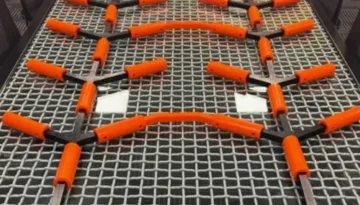
Beater bars are an engineered solution that plays a crucial role in preventing screens from blinding or pegging during various material screening processes. They are not a type of screening media themselves, but rather a supplementary system that sits on top of your existing screen mesh to improve its performance.
Their entire purpose is to solve these issues by agitating the screen surface.
They work by creating vibrations or impact forces. This agitation actively breaks up clumps of material and keeps the screen mesh clear. This action dislodges trapped material and ensures a continuous flow, which is essential for maintaining optimal screening performance and productivity.
Tegman manufactures these beater bars as a versatile system. They are designed to be used with various screen types, including both wire mesh and PU screens. Furthermore, they can be connected to fit any desired length, making them a flexible solution for different machine sizes. This makes them particularly beneficial in industries like mining (on both mobile and static screens), aggregate processing, and recycling.
A Deeper Look at Blinding and Pegging
To understand how beater bars work, it is important to first understand the root causes of the two problems they are designed to solve. Blinding and pegging are distinct issues, and they are not always interchangeable.
The Problem of Blinding
Blinding is a problem that occurs with fine material. It happens when fine particles, which should be passing through the screen, instead clog the openings. The brochure identifies the most common cause as “fine, sticky, or moist materials.” This stickiness (often from moisture or clay content) acts as a binding agent.
This material effectively “paints” over the screen mesh, smearing into the apertures and creating a solid, impassable surface. This significantly reduces the screen’s efficiency. Once this happens, no more fine material can pass through. This leads to good, valuable product being carried over into the oversize pile, contaminating your stockpile and representing a direct loss of profit.
The Problem of Pegging
Pegging, on the other hand, is a mechanical issue. The brochure states that this happens when “larger particles lodge in screen holes,” disrupting proper classification. These are often called “near-size” particles.
They are just the right size and shape to get stuck, and the normal vibration of the screen isn’t enough to dislodge them. One or two pegged particles might not seem like a problem, but this issue quickly escalates. As more and more apertures become plugged, the screen’s open area is drastically reduced, meaning your screen is no longer sizing accurately.
How Beater Bars Restore Efficiency
Now that we have defined the problems, we can look at the solution. Beater bars are an active, mechanical solution to the passive problems of blinding and pegging. They do not just sit there; they are designed to constantly agitate the screen surface.
This agitation is the key. Beater bars help reduce these issues by creating vibrations or impact forces. This action breaks up clumps of material, dislodges trapped material, and keeps the screen mesh clear, ensuring a continuous flow.
In the case of blinding, the vibrations created by the beater bars break up the clumps of fine, sticky, or moist materials. This agitation prevents the fines from smearing into and clogging the screen openings, ensuring the mesh stays clear.
In the case of pegging, the same agitation works to dislodge the larger, trapped particles. The vibrations “pop” the wedged, near-size particles out of the apertures, allowing them to continue their flow and keeping the screen holes open for proper classification.
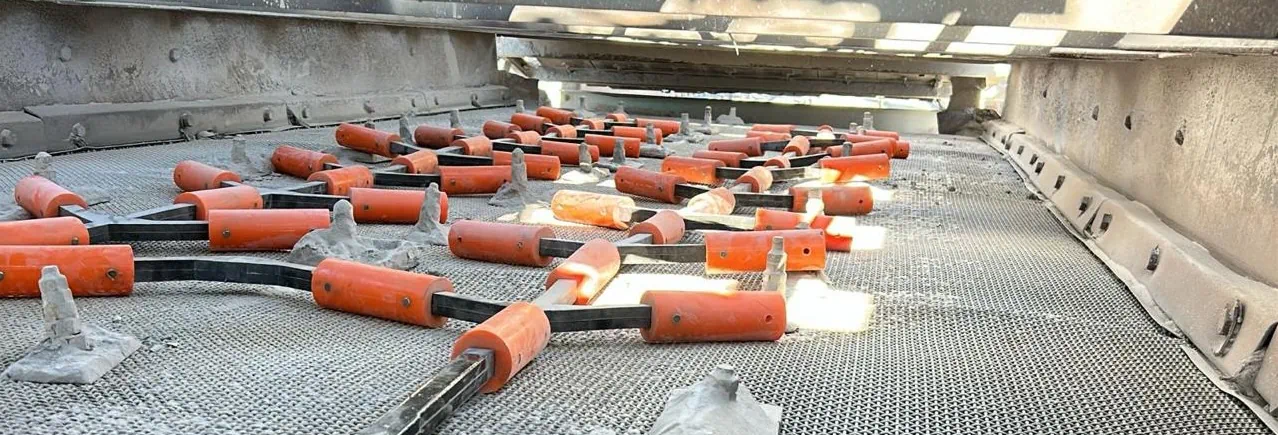
This system is effective because it is designed for use with various screen types, including both wire mesh and PU screens. The assembly, which includes a fixing rod, is secured to the back plate on the feed side of the screening machine, allowing the beater bars to sit on top of the screen media.
Furthermore, Tegman manufactures the beater bars so they can connect and fit any desired length. This adaptability is essential for ensuring a continuous flow and allowing your screening plant to maintain optimal performance and productivity.
Beater bars play a crucial role in preventing your screens from blinding or pegging during various material screening processes. By creating vibrations and impact forces, they break up clumps and keep the screen mesh clear. This continuous agitation is highly beneficial in industries such as mining, aggregate processing, and recycling, where maintaining optimal screening performance is essential for productivity.
A Flexible, Modular System for Any Deck
One of the key advantages of the Tegman beater bar system is its flexibility. It is not a rigid, one-size-fits-all component. Instead, the brochure describes it as a fully modular system , allowing you to build exactly the length you require. This design gives plant managers the power to build a solution that is quick, flexible, and built for optimal screening performance.
Quick and Simple Assembly
The system is designed for fast assembly, removal, or replacement. Modular sections connect with a simple pin , and joining rods can be used as needed to ensure the beater bars stay in place. This creates a flexible, hassle-free setup.
Customisable Layouts and Coverage
This modularity means the layout is fully customizable to suit your processing needs and machine type. You are not forced to cover the entire screen. As the brochure states, “the choice is yours”. You can fit the full deck, or cover only the specific areas affected by pegging or blinding.
This allows for precision coverage. You can choose 100%, 75%, 50%, or 25% screen coverage to target pegging and blinding only where it happens most.
Furthermore, the system can be configured in multiple rows. You can run a single row, a double row, or as many rows as your application requires. This ability to easily adjust the length and configuration to suit any deck ensures you get a custom fit for optimal performance.
An Essential Upgrade for Your Screening Plant
In the demanding industries of mining, aggregate processing, and recycling, maintaining optimal screening performance is essential for productivity. As we have seen, the common problems of screen blinding and pegging are a direct threat to this efficiency, causing costly downtime, reducing efficiency , and disrupting proper classification.
Beater bars are the proactive, engineered solution to this problem. By providing constant agitation to the screen surface, they break up clumps , dislodge trapped material , and ensure a continuous flow. Their flexible, modular system allows for a custom-fit solution , whether you need to cover the full deck or just a small problem area.
Before upgrading your plant, it is important to note the key installation requirements. Beater bars are designed to be installed on the bottom deck of the screening machine. To ensure the system operates effectively, a minimum clearance of 200 mm must be maintained between the top surface of the bottom deck and the underside of the deck above it.
Stop letting blinding and pegging slow down your operation. If you are ready to improve your screening efficiency, it is time to get in touch. Contact the Tegman team today to discuss your specific application and get the right beater bar solution for your plant.